 Diaper Days
Write down the part you want to remember
Start with what you saw. You might remember where you were, who was nearby, the sound your baby made or the small thing that made everyone laugh. A date and two sentences can preserve more of the moment than a title alone.
An entry could read: “After lunch on the kitchen rug. Rowan waved when Grandma appeared on the video call, then laughed when she waved back.” You can picture the scene later without needing a long journal entry.
Use your family’s words. A familiar nickname, the song you were singing or the toy they kept choosing may be what makes the memory yours. Ordinary moments can belong beside the bigger firsts.
Keep the date and photo you have
Save the date you observed the moment. If you are writing from memory, explain an approximate date in the note. You can still keep a memory when the exact day has slipped away.
Another caregiver may remember seeing something earlier. “First time I saw it” leaves room for both accounts. You can add their recollection without turning the journal into a decision about which moment was the official first.
A photo can bring back the room, the clothes or the person holding your baby. Choose one that adds something you want to remember; a written entry can also stand on its own.
Bring development questions to a conversation
A family journal records the moments you noticed and chose to save. A quiet stretch in the journal may mean you did not make entries. Another family’s dated photo gives you little context about their child.
Developmental checklists have a different purpose. The CDC describes its milestone checklists as tools for communication between families and professionals; they are not screening or diagnostic tools. If you have a concern about your child’s development, tell their clinician what you have observed and ask about the next step.
A dated note can help you describe a specific observation during that conversation. Keep the question and the clinician’s guidance where you can find them again, alongside any notes from the visit.
Keep little firsts beside everyday memories
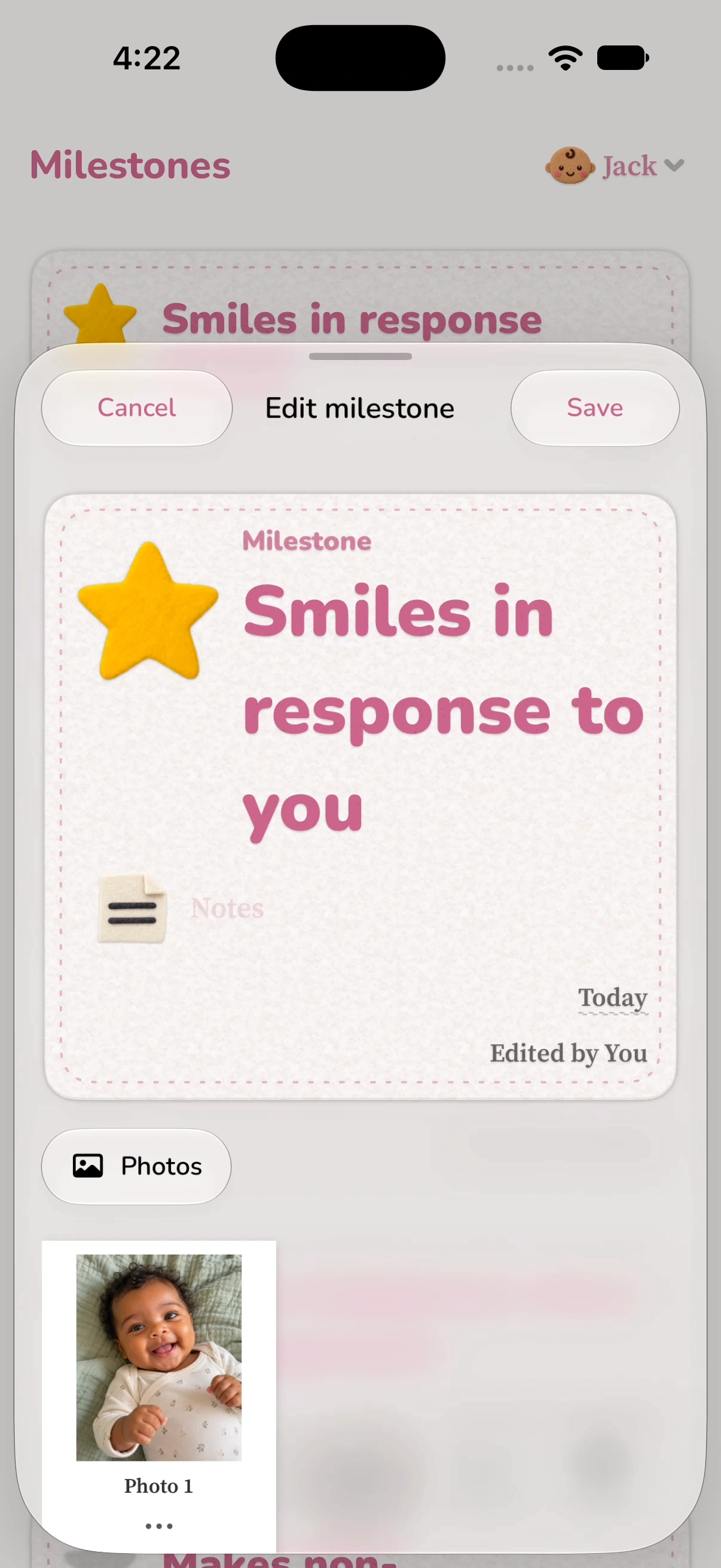
Diaper Days lets you save a milestone with a date, a note and photos. Add your own firsts for the moments that matter to your family, from a first smile to the first time they joined in with a favorite song.
The app also includes developmental observations based on CDC milestone material. Those observations stay separate from the firsts you create for your family, and do not assess or diagnose your child’s development.
You can return to a saved moment and add the detail you remembered later. For recurring activities such as reading or outdoor time, a custom activity can keep the ongoing record while the milestone preserves one particular memory.

Let caregivers contribute what they saw
Sharing your child’s profile lets caregivers keep memories in the same Diaper Days record. One person may have the photo and another may remember the words or the date. Agree which moments and photos you want to keep together.
A short note can preserve a caregiver’s account in their own words. You can return to those details even when the next handoff is mostly about feeds and naps.