 Diaper Days
Keep the details you will want to check later.
Start with when the session began. If you want to remember sides, keep left and right with their own times. Add a note for something you want to discuss or remember, such as an interrupted session or a time you filled in afterward.
You do not need to turn every feed into a long entry. Choose a few details you can record consistently. A short record you can maintain is easier to consult than a detailed system you stop using halfway through the day.
Decide how to handle pauses. If a timer runs while you take a break, the result means something different from a timer paused during that break. Use the same approach when possible, and note an interruption when it will help you understand the session later.
Read the session and its sides together.
Imagine a session that starts on the left, pauses, then continues on the right. Keep those parts connected to that session so you can find both the last side and the overall timing. A list of separate, unexplained timer readings is harder to follow a few days later.
Timed minutes describe the time you recorded nursing. They do not tell you the volume of milk your baby drank. Keep bottle amounts and pumping output as their own measurements if those are also part of your feeding record.
Use the record for one concrete question.
You might want to find the last session before a nap, remember whether you switched sides, or describe an interrupted morning to a feeding professional. Read the individual sessions and their notes before looking at a daily total.
A log can help you describe what you observed when you ask for support. Your baby’s clinician or a qualified feeding professional can help with questions about feeding comfort, effectiveness or intake.
Keep both sides in one Diaper Days session.
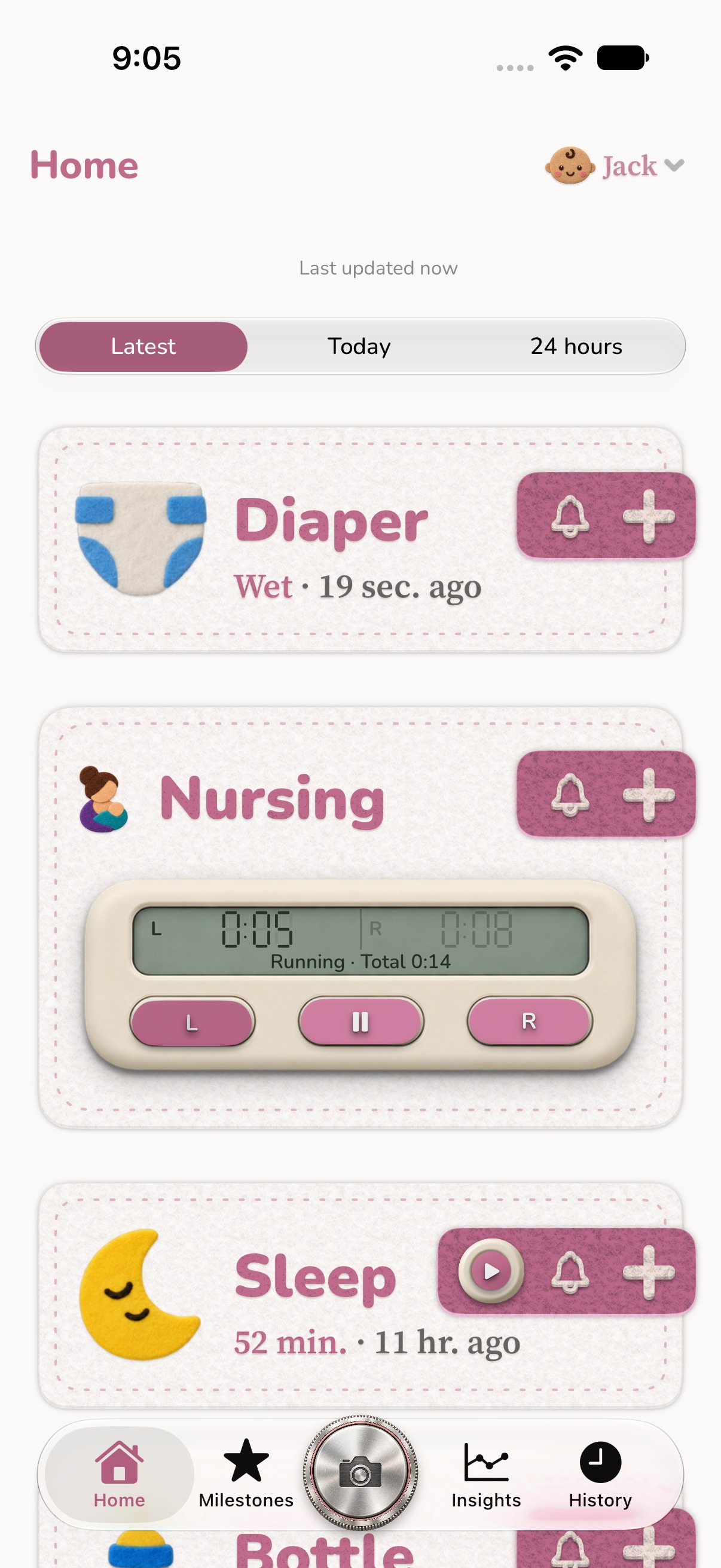
Diaper Days calls breastfeeding Nursing. Its nursing timer keeps the left and right sides together so you can switch sides, pause and return to the same session. You can also add a completed event when you already know the details.
Save the session with the rest of your child’s day. Later, open it to correct a time or add a note. Nursing entries stay recognizable beside bottles, sleep and diaper changes, so you can look back at the events around a feed without maintaining a separate diary.

Compare the sessions you have recorded.
Diaper Days Insights shows recorded nursing duration by side, session counts and session length. Compare the same dates, then check the underlying events when something stands out. More recorded minutes might reflect a different day or a different way of using the timer; the chart alone cannot explain the cause.